Making Tax Digital update

Making Tax Digital

Making Tax Digital (MTD) will become mandatory for the self-employed and landlords in 2024. Although there is no major news, a recent webinar co-hosted by HMRC has shed more light on the sign-up process, the use of spreadsheets and joining the pilot scheme.

MTD will come into effect for accounting periods commencing on or after 6 April 2024. For general partnerships (those with only individuals as partners), the start date is 6 April 2025.

Large partnerships with 20 or more partners are not included within the definition of a general partnership, and for them – along with other non-general partnerships – there is still no start date.

Signing up

It is going to be necessary for each taxpayer to sign up individually, but tax agents will be able to do this on behalf of clients. Agents will be able to sign up clients up to 12 months in advance of needing to comply with MTD.

Unfortunately, no further details have been provided, although HMRC did say the process will be different to the current MTD pilot sign-up process, which requires a substantial amount of information, plus a Government Gateway account.

Spreadsheets

HMRC has made it clear that spreadsheets can be used to fulfil the record-keeping requirement of MTD. However, when it comes to the filing requirement, MTD-compatible bridging software will be necessary.

The bridging software will need to be more advanced than that used for MTD for VAT. That is because for VAT returns, information is only sent in one direction – to HMRC. For income tax submissions, the software will also receive data from HMRC.

Pilot scheme

The scope of the pilot is still quite restricted, with taxpayers only able to sign up through their software provider.

·         Anyone who needs to report income from other sources, such as employment income, cannot join.

·         Only sole traders and landlords with a 5 April accounting date (not 31 March) can join.

·         Anyone who is not up to date with their tax payments (so excluding those who have set up a time to pay arrangement) or tax return submissions cannot join.

HMRC’s list of software that is compatible with MTD for income tax can be found here.
More disclosure on the cards for businesses

A downside to running a limited company is that financial information is publicly available. However, micro-entities and small companies do not have to file a profit and loss account, so available information is somewhat restricted. This situation is set to change.

The information currently filed by a micro-entity at Companies House can be as little as just three figures: total fixed assets, current assets and current liabilities. If a company provides services, with profits largely withdrawn as remuneration, these figures might all be negligible.

Thresholds

For a company to be classed as either a micro-entity or small company, it needs to be below any two of three thresholds for turnover, balance sheet total (total of fixed and current assets) and average number of employees:


Micro-entity

Small company

Turnover

£632,000

£10.2 million

Balance sheet total

£316,000

£5.1 million

Employees

10

50


A company can continue to qualify under either definition if it temporarily fails to meet the criteria for just the one year.

Changes

The key change in the government’s white paper, Corporate Transparency and Register Reform, published in February ­– setting out its final position on reform ahead of introducing legislation – is that micro-entities and small companies will have to file their profit and loss account. This means that sensitive commercial information will be readily available to a company’s competitors. Employees, customers, family members and any other interested parties will also be able to see how profitable a company is. In addition, small companies:

·         will lose the option of preparing abridged accounts, so a full balance sheet will be required; and

·         will have to file a directors’ report.

Although it will be some time before the extended filing requirements come into effect, they are an additional consideration when setting up a new business or deciding whether to incorporate an existing business.

Companies House accounts guidance can be found here.

Zero-rated food confusion

The distinction between zero-rated food and standard VAT confectionery is a crucial, and complex, one – not helped by what may appear to be apparently arbitrary rulings. Despite its predecessor losing a notorious ruling over the zero-rating of Jaffa Cakes more than 30 years ago, HMRC refuses to give ground on marginal cases. The latest target was the simple flapjack.

As an example of the complexity, tap water is zero-rated, but a bottle of water is not (although a bottle of milk is). It ‘logically’ follows that ice is zero-rated if made from tap water, but not if from bottled water – although good luck telling the difference. Baked goods are a similar minefield.

Flapjacks

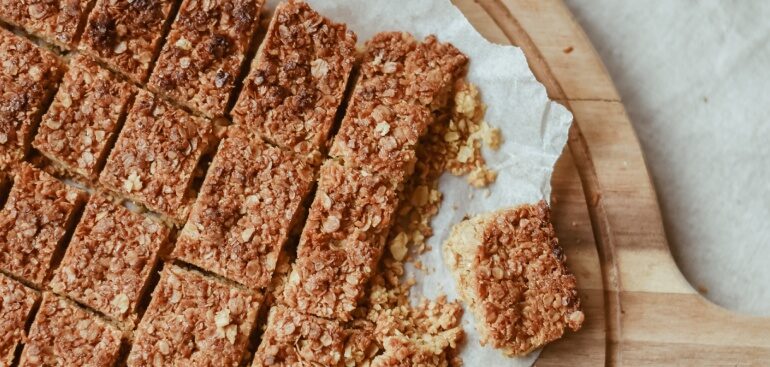
There might be little obvious difference between a flapjack and a cereal bar, but flapjacks benefit from zero-rating, being classed as cakes, simply because they were around first. The more recent cereal bars are classed as VAT-able confectionery.

Not surprisingly, HMRC is not at all happy with the distinction, and define flapjacks as narrowly as possible.

·         HMRC only allow zero-rating of ‘standard’ flapjacks, along with minor variations, such as the addition of dried fruit or chocolate chips.

·         HMRC will not accept any alteration to a flapjack that takes it into the category of being a cereal bar.

In two cases, HMRC pursued these distinctions to the detriment of the companies involved.

Glanbia Milk

This company was recently on the wrong side of a First-Tier Tribunal decision. Compared to a ‘standard’ flapjack purchased in a cafe or at a supermarket, the flapjacks produced by Glanbia Milk had fewer calories, about 10 times less sugar, and very low levels of fat. The products were not baked like traditional flapjacks, and contained significant amounts of protein, an ingredient not traditionally associated with cakes.

DuelFuel

This small start-up has hit a similar problem with its range of flapjacks and protein cake bars, and may have to close as a result. HMRC is not permitting zero-rating for their products because of issues similar to the Glanbia Milk case. Based on the taste, texture, ingredients, packaging and marketing, the products produced by DuelFuel are not considered to be cakes.

If you are tempted to embark on a baking career, be warned. HMRC guidance on the VAT treatment of food products (VAT Notice 701/14) can be found here.