

Miscalculated corporation tax reliefs targeted by HMRC

Companies that may have miscalculated their corporation tax marginal relief may receive a letter from HMRC as part of a new campaign. The targeted errors could be due to ignoring associated companies.

Associated companies

Directors will be aware that the first £50,000 of their company’s profit benefits from a corporation tax rate of 19%, compared to the main rate of 25% applicable once profits hit £250,000. This means:

  • Marginal relief eases the transition from the 19% rate to the main rate.
  • Directors may not appreciate, however, that the £50,000 and £250,000 limits are shared across associated companies.
  • For example, if a company has two associated companies, marginal relief will apply on profits between £16,667 and £83,333.

Essentially, companies are associated if one is under the control of the other, or if both are under common control. It doesn’t matter whether a company is associated for part of an accounting period, or where a company is resident. However, dormant companies are not treated as associated.

The associated company rules can be quite complex, and, in some circumstances, a company owned by a spouse, civil partner, parent, child or sibling can be treated as an associated company.

One-to-many letters

Any company receiving a letter only has 30 days in which to respond to HMRC, and, if necessary, make any amendment. HMRC could, of course, be mistaken, such as where an alleged associated company is, in fact, dormant.

What a director should definitely not do is ignore a letter. If HMRC were to follow up with a formal compliance check, the process would likely be time-consuming and costly.

Planning

If a company’s corporation tax is higher than it would otherwise be as a result of having associated companies, the overall company structure needs to be reviewed. For example, two companies under common control might have profits of £49,000 and £1,000 respectively. The total corporation tax bill could be reduced by £1,800 if the two companies were combined into one company.

HMRC’s guidance on marginal relief can be found here.
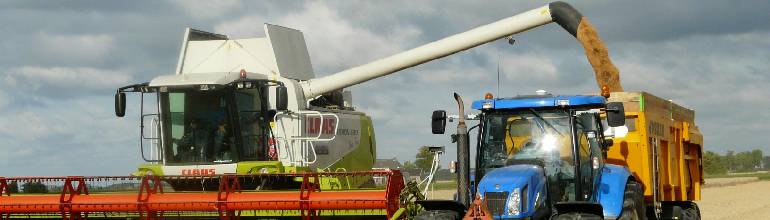
More detail on business and agricultural IHT reliefs threshold cut

HMRC’s recently closed consultation offers further clarity on how the £1 million inheritance tax (IHT) business and agricultural relief allowance will work from 6 April 2026.

The total value of business and agricultural property eligible for 100% IHT relief will be limited to £1 million. Any qualifying assets above this limit will receive relief at a reduced rate of 50%.

For an entrepreneur with a business valued at, for example, £5 million, the new relief threshold could result in an additional IHT liability of £800,000.

The relief

The £1 million allowance will be used up by any lifetime transfers of business and agricultural property made within seven years of death. So:

  • The allowance will be renewed every seven years on a rolling basis in a similar way to the nil rate band of £325,000.
  • Business and agricultural property that only qualifies for 50% relief, such as Alternative Investment Market shares, will not use up the £1 million allowance.

Although spouses and civil partners will each qualify for their own £1 million allowance, any unused allowance will not be transferable in the same way as the nil rate band.

Planning

Currently, with unrestricted 100% business and agricultural relief, IHT planning primarily concerns ensuring relief is available.

  • In future, there will be more incentives to make lifetime gifts where the £1 million allowance is insufficient to cover the value of business and agricultural property. This, of course, has implications for capital gains tax that must be considered.
  • It may be worthwhile to put a fairly substantial gift into trust. For example, the lifetime IHT payable on a £2 million gift of agricultural property into trust would be £35,000

If making a lifetime transfer of business or agricultural property to a spouse or civil partner, you must be aware that the property should be held for two years before relief will be available.

Annex A of HMRC’s consultation has six case studies which illustrate how the £1 million allowance will be applied. The consultation can be found here.