
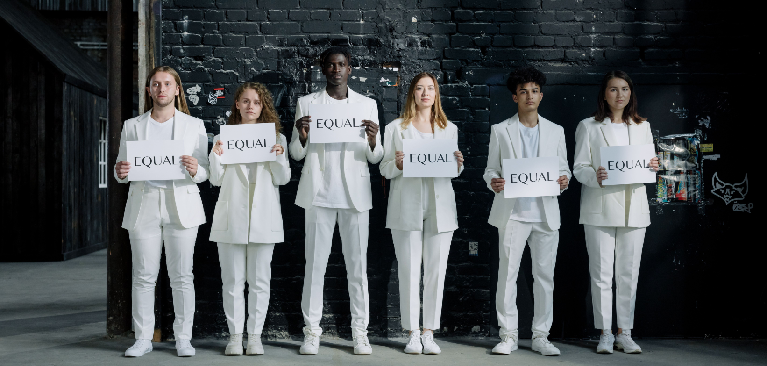
Unmarried couples: major legal reforms proposed

Couples

The law in England and Wales is moving a step closer to treating married and unmarried couples in a similar way.

“Over 3.5 million couples live together without getting married or entering a civil partnership, a number that has more than doubled over the past three decades. Despite this, cohabiting couples and their children have very limited financial protections should a relationship end.”

So says the foreword to A fairer end to relationships, a 100-page paper from the Ministry of Justice that makes proposals on divorce for married couples and civil partners, and separation and intestacy for unmarried couples in England and Wales. The most significant proposals are those affecting unmarried couples, for whom there is currently much less legal protection than for married couples. For example, while intestacy rules start with the surviving spouse as the main beneficiary, the survivor of an unmarried couple is ignored.

The new regime for unmarried couples would automatically apply to adults in “long-term, committed and interdependent relationships” who have lived together for at least three years or live together and share a child. However, there would be an option to opt out where both parties agree, subject to certain safeguards.

Under the proposed framework, the starting point would be that each person keeps what they legally own. The court would then consider the parties’ needs, with the aim that these should be met in a way that enables both parties to “transition to independence… as far as resources allow”. This limited definition of needs would mean that cohabitants cannot receive a more favourable outcome than spouses in comparable circumstances. Children’s welfare would be the primary consideration of the court, ensuring their welfare is protected where resources are limited.

While the settlement mechanisms would be similar to those currently applying on divorce, the goal would be to achieve a clean break wherever possible, with maintenance limited to exceptional circumstances, such as long-term ill health.

On intestacy, the proposal is that rights of inheritance should be extended to ‘qualifying cohabitants’. The minimum duration for qualification would not necessarily be the same as applied on separation and might be longer.

If you are in an unmarried relationship, do not wait for the law to change, which could take years – if it happens at all. Make sure your legal and financial planning works within the existing legal framework, which does not recognise common-law marriage.

The government’s proposal on reforms for unmarried couples can be read here

New first time buyer ISA on the cards

ISA

Although no date for its introduction has yet been announced, the government has recently provided some details for the new first time buyer individual savings account (FTB ISA), which is set to replace the lifetime ISA (LISA).

Essential differences

The LISA never garnered a large take-up, so its replacement has some fundamental changes:

  • Target: The FTB ISA is for first-time property purchasers only, whereas the LISA can also be used to save money for retirement.
  • Age limit: To open a LISA, a saver must be 18 to 40, with no subscriptions allowed over age 50. With the FTB ISA, the only requirement is that a saver be 18 or over; there is no upper age limit.
  • Bonus: With the LISA, the government bonus is paid monthly, so the saver benefits from interest or investment growth on bonus payments. However, with the FTB ISA, the bonus will only be paid when a property is purchased.
  • Withdrawal penalty: The LISA comes with a withdrawal penalty of 25%, meaning a saver will end up with less than they paid in. There will be no penalty for withdrawing funds from the FTB ISA.

The government has said that any change to the property price cap of £450,000 will apply to both products.

Interaction

A saver who already has a LISA, or opens one before the FTB ISA is introduced, will be able to continue to contribute to it indefinitely. Although it will not be possible to transfer a LISA into the FTB ISA, a saver will have the choice each tax year whether to save into a LISA or FTB ISA. It will then be possible to combine the funds held in both accounts when making a property purchase.

Although there is no withdrawal penalty for the FTB ISA, the timing of the government bonus would seem to give the LISA a distinct advantage, although full details of the new product have yet to be announced.

The government’s guide to lifetime ISAs can be found here.

Stablecoins to escape CGT

Stablecoins are currently taxed in the same way as other cryptoassets. However, this is set to change from April 2027, when eligible stablecoins are expected to be treated similarly to money for tax purposes.

Why stablecoins?

Stablecoins are currently dominated by US dollar-based products, with stablecoins worth over $300 billion in circulation. They are extremely convenient for investors who wish to park their funds while buying and selling other more volatile cryptoassets.

Stablecoins are a good way to pay for goods and services, avoiding most of the costs associated with traditional payment methods such as credit cards. This is especially the case with cross-border transactions. Around 1.2 million individuals engage in stablecoin transactions, and the changes will make the tax framework easier to understand. 

Eligible stablecoins

An eligible stablecoin will broadly be defined as a cryptoasset that maintains a stable value in relation to a fiat currency. Fiat currency or other assets will need to be held for the purposes of supporting the stable value. 

Cryptoasset disposals

Most disposals of cryptoassets are subject to capital gains tax (CGT). There is a disposal if an individual:

  • sells a cryptoasset;
  • exchanges one type of cryptoasset for a different type of cryptoasset;
  • uses cryptoassets to pay for goods or services; or
  • makes a gift of cryptoassets to another person (unless it is to their spouse or registered civil partner).

However, there is no disposal if, for example, an individual simply moves cryptoassets between different wallets.

Tax status changes

From 6 April 2027, the disposal of eligible stablecoins by an individual will be exempt from CGT. Although most stablecoins are non-interest bearing, should any interest-like returns be received from holding eligible stablecoins, this will be treated as savings income subject to income tax. The personal savings allowance of £1,000 or £500 will potentially be available.

The government’s policy paper on the taxation of stablecoins can be found here.