

Company cars make a green comeback

The number of directors and employees with company cars declined by 240,000 between 2015/16 and 2020/21, but numbers have rebounded every year since – largely due to the beneficial tax treatment of electric and hybrid vehicles.

HMRC’s latest figures for the 2024/25 tax year show that there are now 920,000 directors and employees with company cars.

Lower emission vehicles

The most marked change applies to fully electric company cars. Before 2020/21, this type of company car was something of a novelty, but numbers have since taken off, accounting for  just over half of the total by 2024/25. Add in low emission hybrid variants (CO2 emissions between 1 and 50 grams per kilometre) and it’s just about three-quarters of the total. In fact:

  • The tax cost of having a low emission company car is significantly lower compared to a petrol or diesel variant. For the current tax year, a fully electric company car has a 4% benefit-in-kind rate.
  • This means that the annual tax cost for a higher rate taxpaying director with a company-provided Tesla Y Performance Auto is around £990 – despite such a car costing well in excess of £60,000.

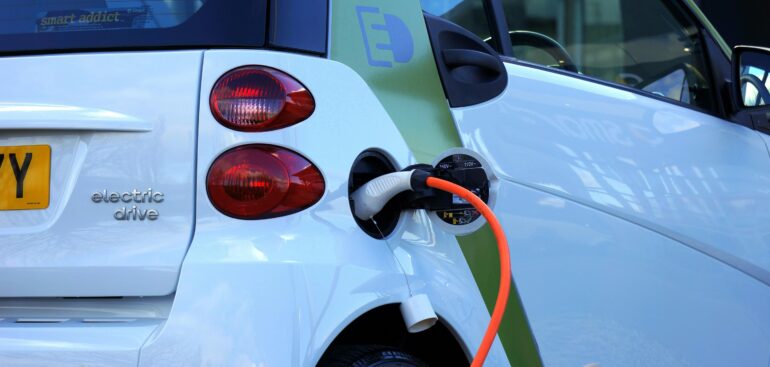
There is also no taxable benefit if the employer provides a charging point for directors and employees to recharge an electric company car either at work or at home, adding to the tax advantages.

The tax position is less advantageous for low emission hybrids, as the benefit-in-kind rate will typically be between 10% and 16%. For a Toyota Prius plug-in hybrid costing around £38,000, the annual tax cost for a higher rate taxpaying employee will be just over £1,500; still not excessive.

Future changes

By 2029/30, the current benefit-in-kind rate of 4% will increase to a much less favourable 9%, putting up the annual tax cost of the Tesla to just over £3,300. Future increases will push up the tax cost of the Toyota Prius hybrid to around £2,870.

The tax cost of having a company car can be calculated using HMRC’s company car and car fuel benefit calculator.

Approved mileage rate hike

Mileage

The Chancellor has announced a 10p per mile increase for the tax-free mileage rates, which can be paid to employees using their own cars for business purposes, with the increase backdated to 6 April 2026.

Mileage rates

The 10p per mile increase only applies to the first 10,000 business miles driven each tax year. This means that the rates to be reimbursed by employers to employees using their own vehicles for business mileage are now:


Vehicle

First 10,000 business miles each tax year

Subsequent business miles each tax year

Cars and vans

55p

25p

Motorcycles

24p

24p

Bicycles

20p

20p

For car and van trips, an employee can also be reimbursed an additional 5p per mile per passenger, so 70p per mile in total if three passengers are carried.

E-bike riders should be paid the bicycle rate for an electrically assisted pedal cycle, and the motorcycle rate for any other electric bike:

  • Where an employee uses more than one car for business mileage during the tax year, the 10,000 limit applies across all cars used; it is not per car. So, if 4,000 business miles are driven in one car for the first three months of 2026/27, with 9,000 driven in another car for the other nine months, the maximum tax-free reimbursement is 10,000 miles at 55p, plus 3,000 miles at 25p, which is £6,250.
  • Any reimbursement in excess of the approved rates for the tax year overall is treated as earnings and subject to tax.

When it comes to National Insurance contributions (NIC), the NIC-free rates are similar, except that 55p per mile can be paid for every business mile driven in a car or van; there is no 10,000-mile cut-off.

Other uses

Employees who are not reimbursed with the maximum mileage rate can claim tax relief on the difference between the rate and what they were reimbursed. An employee can therefore claim the full 55p/25p per mile car rates if the employer makes no reimbursement at all.

Sole traders and partnerships can use the mileage rates for cars, vans and motorcycles when working out their vehicle expenses to be deducted in calculating trading profits. The same applies to unincorporated landlords when calculating property income. However, in both cases, there is no additional allowance for passengers carried.

HMRC guidance on business travel mileage for employees’ own vehicles can be found here.

Electric car charging rates change – home and away

Mileage

Starting 1 September 2025, two separate advisory fuel rates apply to fully electric cars depending on whether charging is at home or using a public charger.

HMRC’s advisory fuel rates can be used to reimburse employees for business travel in their company cars, or where employees are required to repay the cost of fuel used for private travel.

Rates

The electric car rate was previously 7p per mile, regardless of where charging took place. Reimbursement at this rate meant company car drivers could be faced with a substantial shortfall if they made extensive use of public charging networks.

Advisory rates are now 8p for home charging, with 12p for public charging. Although the previous single rate can continue to be used until 30 September, from 1 October only the new rates can be applied. This means:

  • The change to two separate rates reflects the higher cost of using public charging locations.
  • However, the public charging rate is based on the typical cost of a slow or fast charge. It will, therefore, normally be less than what a driver would pay to use an ultra-fast charger.
  • If this is the case, reimbursement can reflect the higher, actual, cost provided the rate can be substantiated.

As long as business mileage is reimbursed at an acceptable rate – the advisory rate or a substantiated higher rate – employees will not face a taxable fuel benefit, and there are no national insurance contribution implications for either the employer or employees.

In addition, having rates for different charging locations means more complicated record-keeping requirements for employers.

Hybrids

The change only impacts on fully electric cars. Hybrids are treated as either petrol or diesel cars, so the advisory rates for these types are relevant. There are no changes to the petrol rate from 1 September, but two of the diesel rates have increased by 1p per mile.

HMRC guidance on its advisory fuel rates can be found here.