
Unveiling plans for the Renters’ Rights Bill

While only briefly mentioned in the King’s Speech, the government has now revealed more details of the Renters’ Rights Bill. The Bill will overhaul the private rented sector in England, with some elements also applicable to Wales.

Labour’s election manifesto promised to immediately banish no-fault evictions, but this hasn’t happened. Instead, no-fault evictions will be abolished under the Bill with no changes likely until autumn 2024 at the earliest.

The government has promised expanded possession grounds for landlords to reclaim property, but this won’t help when repossession involves a lengthy court process. This is likely to mean that the requirement for a rent guarantor will become more widespread.

Changes include:

  • Tenants will be given the power to challenge a rent increase if it is a means to eviction.
  • Landlords will not be able to unreasonably refuse a tenant having a pet. This is an important issue for many landlords, because it can subsequently be difficult to relet a property where there has been a pet. Even though landlords will be able to request pet insurance, this is unlikely to be a satisfactory solution.
  • Landlords will have to fix damp and mould issues within strict time limits – known as ‘Awaab’s Law’. There will be clear legal expectations about the period within which homes must be made safe from serious hazards.
  • Landlords will not be able to discriminate against tenants who receive benefits or have children.
  • The practice of rental bidding wars by landlords and letting agents will be stopped, although this practice seems much less prevalent than the government thinks.


Although many of the changes will be unwelcome, Scottish and Welsh landlords have seen more radical measures introduced in favour of tenants. There is also no mention of rent controls.


The government’s background briefing on the Renters’ Rights Bill can be found here starting at page 68.

Caught in the 60% tax trap?

The number of taxpayers caught in the 60% tax trap has increased by nearly 25% over the past year. More than 500,000 people are now affected by higher tax rates due to their income exceeding £100,000.

The 60% rate applies to income between £100,000 and £125,140. This is the tranche of income which sees the £12,570 personal allowance tapered away.

Fiscal drag

There has been no change in the £100,000 income limit since the withdrawal of the personal allowance was introduced in 2010, a classic case of fiscal drag. Once the personal allowance is fully withdrawn, higher earners pay the additional rate of 45% on income in excess of £125,140. However, the 60% charge still applies to income between £100,000 and £125,140.

The past year has seen a particularly high increase in individuals caught by the 60% tax trap due to inflation driving up salaries. The government is unlikely to fix the problem by reinstating the personal allowance for higher earners – the cost would be prohibitive. However, smoothing the transition is a possibility. For example, tapering the personal allowance by £1 for every £4 (rather than £2) that income exceeds £100,000 would reduce the 60% tax rate to a rate of 50%.

Planning measures

Measures that can be taken to mitigate the 60% tax trap vary from individual to individual:

  • Pension contributions are particularly attractive if the government is funding 60% of the cost. Be warned, however, that the October Budget might see the tax relief given on pension contributions restricted to a flat rate.
  • Some income reallocations might be possible between spouses and civil partners, especially if they are in business together.
  • Make the best use of tax-free investments to turn taxable investment income into non-taxable income.
  • Be mindful of the timing when cashing in investment bonds or making pension withdrawals.

Employees should consider using a salary sacrifice arrangement for pension contributions or low-emission company cars.

Details of income tax rates and personal allowances for the current tax year can be found on the government website here.

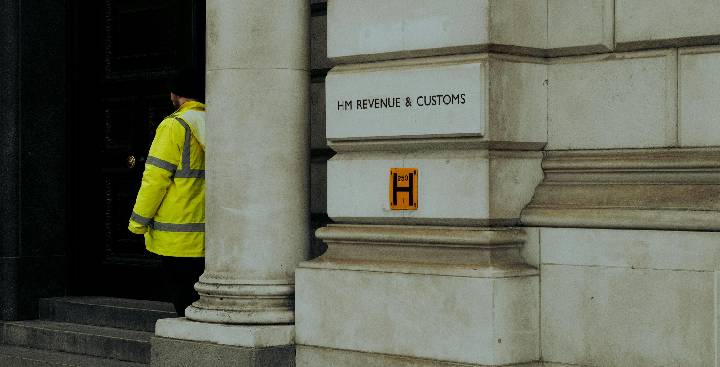
Can you spot a fake HMRC letter?

Unfortunately, scam warnings have become a regular occurrence. The latest scam highlighted by HMRC is rather ‘old school’, involving letters posted to companies instead of the more usual digital communication.

The scam letters being sent out are quite convincing. They come with a genuine-looking HMRC letterhead, and purport to come from the ‘Indv and Small Business Compliance’ team.

Targeted companies

The scam focuses on the claim that a targeted company is required to verify their income in order to identify any business not declaring their full income. They then request:

  • business bank statements for the past 13 months;
  • the latest set of filed accounts, including information which – for smaller companies – would not be available from Companies House;
  • VAT returns for the last four quarters; and
  • for each director, a copy of their passport or driving licence.

Scammers can easily use copies of a director’s passport or driving licence to steal their identity for fraudulent purposes, possibly even accessing the company’s bank account.

The scam letter uses intimidation tactics, threatening an investigation and a potential freeze on business activity if a response is not received.

Spotting the scam

These scam letters use correct technical legislation and avoid obvious spelling and most linguistic mistakes that are usually clear giveaways. Two things to bear in mind when looking out for such frauds:

  • HMRC does usually request information from companies by letter or via a business tax account, rather than by email.However, HMRC email addresses end @hmrc.gov.uk, while the email address used in these fraudulent letters is: companies-review@hmrc-taxchecks.org.
  • A legitimate HMRC letter will include the company’s unique tax reference (UTR).

HMRC has published a list of their recent letters to help you confirm if a letter is genuine. The list can be found here.